
Executive Summary
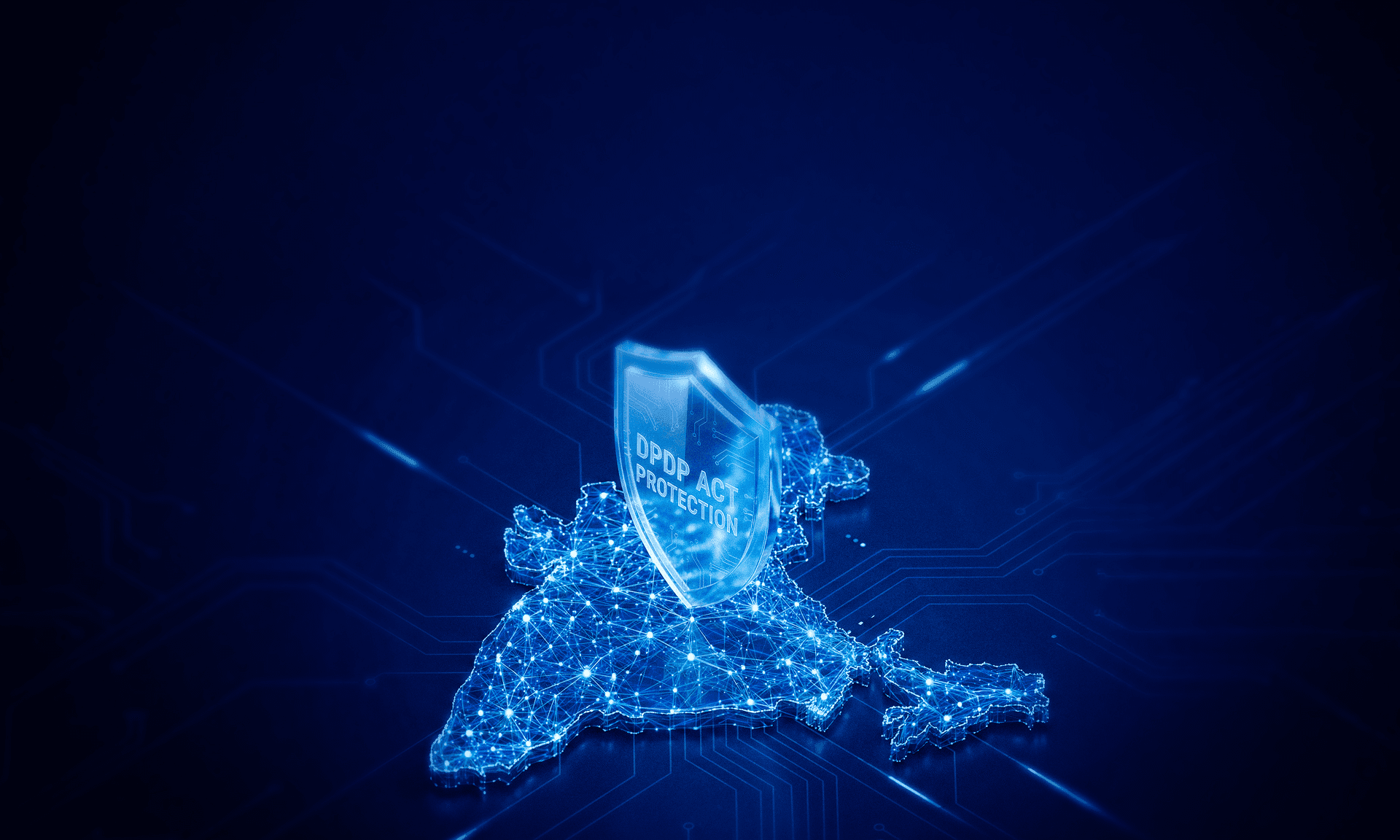
Modern SaaS organisations must protect customer data, demonstrate privacy governance, and satisfy enterprise procurement requirements. This case study describes how CyberSigma helped a rapidly growing SaaS company (client name withheld under NDA) transform privacy governance aligned with India’s Digital Personal Data Protection (DPDP) requirements.
Client Overview
A rapidly growing SaaS company providing workflow automation and customer engagement solutions to enterprise clients was facing increasing pressure around data privacy, compliance governance, and customer security expectations. The platform processed PII, employee records, customer communication data, user analytics, billing information, and business operational data across multiple regions. As enterprise customers demanded stronger compliance assurances during procurement and security reviews, leadership recognised the need for a structured privacy governance framework aligned with DPDP requirements.
- Industry: Software as a Service (SaaS)
- Organization size: 300+ employees
- Region: India with global customer operations
- Scope: DPDP compliance, privacy governance, data protection advisory, security & risk management
Challenge
The organisation faced several critical privacy and operational risks as the platform scaled rapidly across a distributed data environment.
- Distributed data across multi-cloud infrastructure, internal apps, and third-party integrations with limited centralised visibility
- Enterprise customer compliance pressure delaying sales cycles due to missing privacy documentation and vendor controls
- Weak consent and transparency mechanisms without standardised workflows, withdrawal procedures, or audit-ready records
- Third-party vendor risks with SaaS integrations processing customer data without formalized privacy assessments
- Access control and insider risk concerns with broad production access and limited role-based governance
Objectives
- Improve DPDP compliance readiness
- Strengthen enterprise customer trust
- Reduce privacy and operational risks
- Build scalable privacy governance practices
- Improve visibility into data processing activities
- Support enterprise sales and compliance requirements
Our Approach
Phase 1: Privacy & Compliance Assessment
A detailed assessment was conducted across SaaS platform architecture, customer data lifecycle, internal processes, vendor ecosystem, consent management workflows, and access governance practices. Activities included data flow mapping, privacy maturity assessment, risk workshops, stakeholder interviews, technical control analysis, and documentation review—revealing excessive data retention, lack of centralised privacy ownership, inconsistent consent practices, over-permissioned access, and limited third-party visibility.
Phase 2: Data Discovery & Classification
Sensitive information assets were identified and classified based on data sensitivity, processing purpose, business criticality, retention requirements, and regulatory exposure—significantly improving visibility into customer data processing across the SaaS ecosystem.
Phase 3: Privacy Governance Framework Implementation
A structured privacy governance framework was established including data protection policies, retention standards, vendor privacy assessment procedures, internal accountability, role-based access governance, data sharing approval workflows, data minimization practices, and employee privacy awareness—with technical recommendations for access logging, encryption, privileged access monitoring, and audit trail visibility.
Phase 4: Consent & Transparency Modernization
Customer-facing privacy operations were upgraded with updated privacy notices, granular consent collection, consent withdrawal functionality, cookie and tracking transparency, and customer rights request workflows—improving transparency and enterprise customer confidence.
Phase 5: Incident Response & Privacy Readiness
A structured privacy incident response framework was implemented covering incident identification, escalation procedures, regulatory reporting readiness, impact assessment workflows, and customer communication processes. Simulation exercises validated preparedness with leadership, engineering, and operations teams.
Solution
- Mapped customer data flows and completed privacy maturity assessment across the SaaS ecosystem.
- Classified sensitive data assets with retention and regulatory exposure criteria.
- Implemented privacy governance framework with policies, accountability, and access controls.
- Modernized consent, transparency, and customer rights request workflows.
- Established privacy incident response with escalation, reporting, and communication processes.
Results
- Significantly improved ability to respond to enterprise security assessments and vendor due diligence reviews
- Strengthened data governance visibility, third-party oversight, and access governance maturity
- Improved privacy transparency contributing to stronger customer confidence and enterprise sales positioning
- Reduced unnecessary data retention with improved privileged access governance and vendor assessment processes
- Built a scalable privacy compliance foundation to support future growth
Timelines and outcomes reflect the documented engagement record for this client; results vary with scope and readiness.
What We Delivered
- Personal-data inventory and processing map (RoPA-style)
- Consent capture and withdrawal workflows aligned to s.6 and the 2025 Rules
- Privacy notices in the required plain-language form
- Data-principal rights machinery — access, correction, erasure workflows with records
- Retention schedule aligned to s.8(7) whichever-earlier erasure, with legal-hold register
- Breach-response procedure aligned to Rule 7 (without-delay intimation, 72-hour Board reporting)
The standard artefact set for this engagement type; per-client environment and architecture details are shared under NDA during procurement, not published.
Lessons Learned
- The data map was the critical path: every downstream artefact — notices, consent, retention — inherited its quality from how honestly the inventory was built.
- Deletion promised in policy but unexecutable in systems is the gap regulators will test; erasure had to be engineered end-to-end including processors, not written into a PDF.
- Building the DPDP machinery once and mapping it to SOC 2 privacy/confidentiality criteria avoided running two parallel privacy programmes.
Talk to the team that ran this engagement
This was a real DPDP Compliance Consulting, Privacy Governance & Data Protection Advisory engagement. If you are preparing for the same, speak to a specialist who has delivered it — not a sales rep. We will give you a clear read on your scope, gaps and the fastest path, and reply within four business hours.

Explore DPDP implementation · more case studies
Liked the case study? Share on: